

What is chamomile?
Chamomile refers to several plants in the Asteraceae family, with Matricaria chamomilla and Matricaria recutita among the species commonly used in research and traditional preparations.
Chamomile contains several bioactive compounds, including flavonoids such as apigenin. Apigenin has attracted scientific interest because of its interaction with biological pathways involved in relaxation and nervous-system activity.
However, chamomile is a complex botanical, and its effects cannot necessarily be attributed to a single compound.
Does chamomile help with sleep?
The clinical evidence is promising but mixed.
A 2024 systematic review and meta-analysis evaluated 10 clinical studies involving 772 participants. The researchers found a significant improvement in Pittsburgh Sleep Quality Index scores. Several individual studies also reported improvements in sleep onset or the ability to stay asleep.
However, the evidence was not consistent across all sleep outcomes. The meta-analysis did not demonstrate clear improvements in sleep duration, sleep efficiency, or daytime functioning. The authors also noted substantial heterogeneity between studies and called for more research using objective sleep measures.
Earlier research has been similarly mixed. A randomized placebo-controlled pilot study in adults with chronic primary insomnia did not find significant differences between chamomile and placebo across several sleep diary measures after 28 days.
This is why chamomile is best described as a promising sleep-support botanical, rather than a proven treatment for insomnia.
How might chamomile support relaxation and sleep?
One of the compounds researchers have studied in chamomile is apigenin, a flavonoid that may interact with pathways involved in relaxation.
This provides a possible biological explanation for chamomile's traditional use as a calming botanical.
However, laboratory mechanisms do not automatically translate into clinically meaningful improvements in sleep. Human trials remain the most important evidence when evaluating whether a botanical actually improves sleep.
How much chamomile has been studied?
There is no universally established optimal dose of chamomile for sleep.
Clinical trials have used different forms of chamomile, including teas, extracts, capsules, and other preparations, with varying amounts and durations.
This makes it difficult to compare studies directly or establish a single evidence-based dose for everyone.
For botanical supplements, the specific extract and standardization can matter as much as the amount listed on the label.
Chamomile as part of a nighttime routine
One of the simplest ways people use chamomile is as part of a calming evening ritual.
That ritual itself may also matter. Lowering stimulation, dimming lights, creating a consistent bedtime routine, and allowing time to wind down can all contribute to healthy sleep habits.
Chamomile can therefore be viewed as one potential component of a broader nighttime routine—not as a replacement for healthy sleep behaviors or clinical treatment when needed.
How Sleep Flow uses chamomile
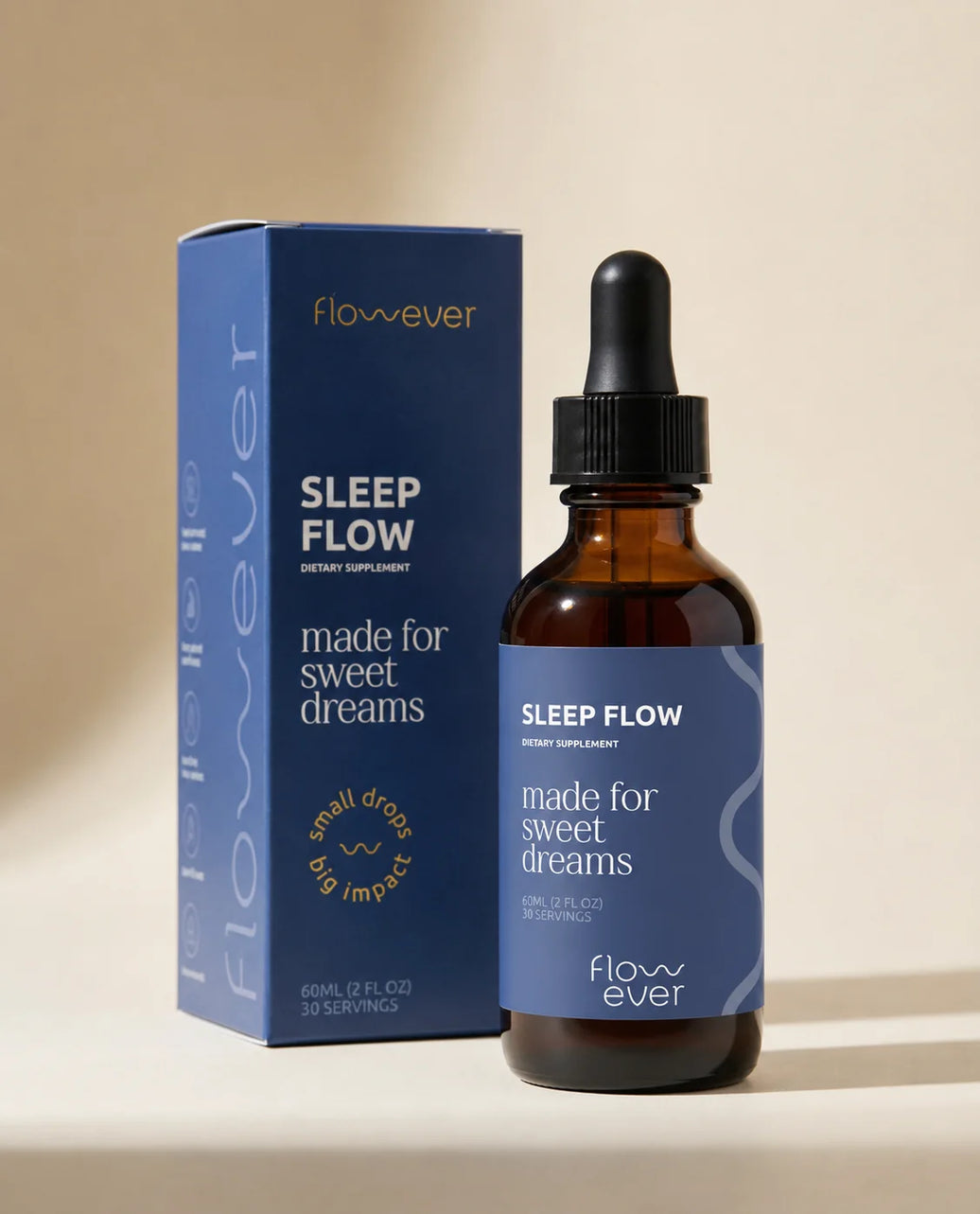
Sleep Flow contains 100 mg of chamomile extract per serving.
It combines chamomile with L-theanine, Montmorency tart cherry, lemon balm, passionflower, and sage.
Rather than relying on chamomile alone, Sleep Flow uses a multi-ingredient approach that brings together several ingredients with different research backgrounds and traditional uses.
Chamomile's role within the formula is primarily as a botanical associated with relaxation and nighttime support.
The bottom line
Chamomile is one of the most widely used botanicals for relaxation and bedtime, and clinical research suggests it may improve some aspects of subjective sleep quality.
However, the evidence is not uniform, and studies have not consistently demonstrated improvements in every measure of sleep.
For that reason, chamomile is best understood as a supportive botanical within a broader approach to healthy sleep, rather than a guaranteed treatment for insomnia.
Frequently Asked Questions
Does chamomile help with sleep?
Research suggests that chamomile may improve some aspects of subjective sleep quality. However, clinical results are mixed, and improvements have not been consistently demonstrated across all sleep measures.
How does chamomile support sleep?
Chamomile contains several bioactive compounds, including apigenin. Researchers have investigated its potential effects on pathways involved in relaxation and nervous-system activity.
Does chamomile make you sleepy?
Chamomile is traditionally used as a calming botanical. Its potential value for nighttime use may relate more to relaxation than to strong sedative effects.
Can chamomile help with insomnia?
Chamomile has been studied in people with insomnia, but the evidence is not strong enough to consider it a proven treatment for chronic insomnia.
What is the best dose of chamomile for sleep?
There is no universally established optimal dose. Studies have used teas, extracts, capsules, and other preparations with different concentrations and durations.
Is chamomile tea good for sleep?
Chamomile tea can be part of a relaxing bedtime routine. However, evidence from studies of chamomile supplements or extracts cannot automatically be applied to every cup of tea because the amount of active compounds can vary.
Can chamomile help you stay asleep?
Some studies have reported improvements in sleep-related outcomes, but evidence for sleep maintenance is inconsistent. More research is needed.
How much chamomile is in Sleep Flow?
Sleep Flow contains 100 mg of chamomile extract per serving, alongside L-theanine, Montmorency tart cherry, lemon balm, passionflower, and sage.