
What is passionflower?
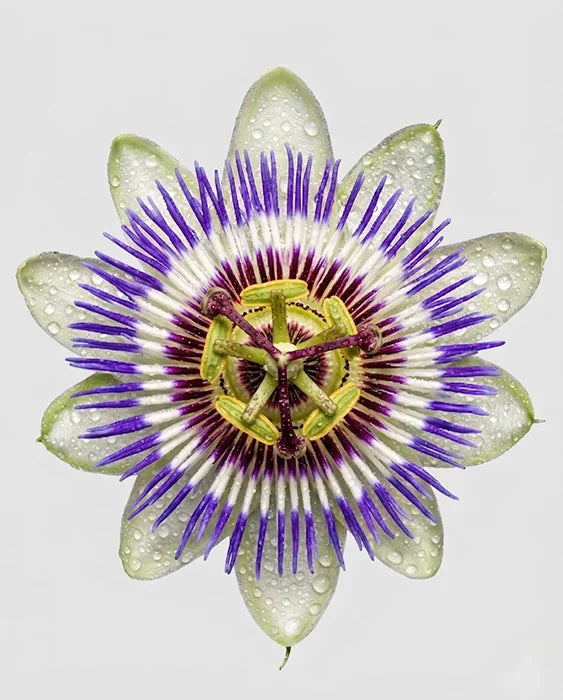
Passionflower is a climbing plant native to parts of the Americas. Passiflora incarnata is the species most commonly associated with traditional use for relaxation and sleep.
The plant contains several bioactive compounds, including flavonoids. Researchers have proposed that passionflower may influence inhibitory signaling in the nervous system, including pathways involving GABA, although the precise mechanisms responsible for its effects in humans are still being investigated.
Does passionflower help with sleep?
Clinical research suggests that passionflower may have potential as a sleep-supporting botanical.
In a double-blind, randomized, placebo-controlled study, 110 adults with insomnia disorder received passionflower extract or placebo for two weeks. Polysomnography showed a significant increase in total sleep time in the passionflower group compared with placebo. Sleep efficiency and wake after sleep onset also improved within the passionflower group, although those measures did not show a significant difference between groups.
An earlier double-blind, placebo-controlled study in healthy adults found that one week of passionflower tea was associated with better subjective sleep quality compared with placebo tea.
More recent research has also investigated standardized passionflower extracts in people experiencing stress and sleep problems, with some studies reporting improvements in sleep-related outcomes. However, differences between preparations make it difficult to generalize results to every passionflower product.
How might passionflower support sleep?
One proposed mechanism involves the GABAergic system, which plays an important role in regulating neuronal excitability and relaxation.
Passionflower has been studied for its potential influence on this system, which may help explain its traditional use for calming and nighttime relaxation.
However, proposed mechanisms should not be confused with proven clinical effects. More research is needed to determine exactly how passionflower influences sleep in humans and which preparations provide the most consistent benefits.
How much passionflower has been studied?
There is no single established optimal dose of passionflower for sleep.
Clinical studies have used different extracts, preparations, and dosing schedules. For example, the randomized insomnia trial used passionflower extract for two weeks, while other studies have evaluated passionflower as a tea or in standardized extracts.
Because botanical preparations can differ substantially in concentration and composition, research findings from one extract should not automatically be applied to another.
Passionflower and nighttime relaxation
Passionflower may be particularly interesting as part of a nighttime routine for people who have difficulty winding down.
But the available evidence does not establish passionflower as a treatment for chronic insomnia, and persistent sleep problems should be evaluated clinically rather than managed exclusively with supplements.
How Sleep Flow uses passionflower
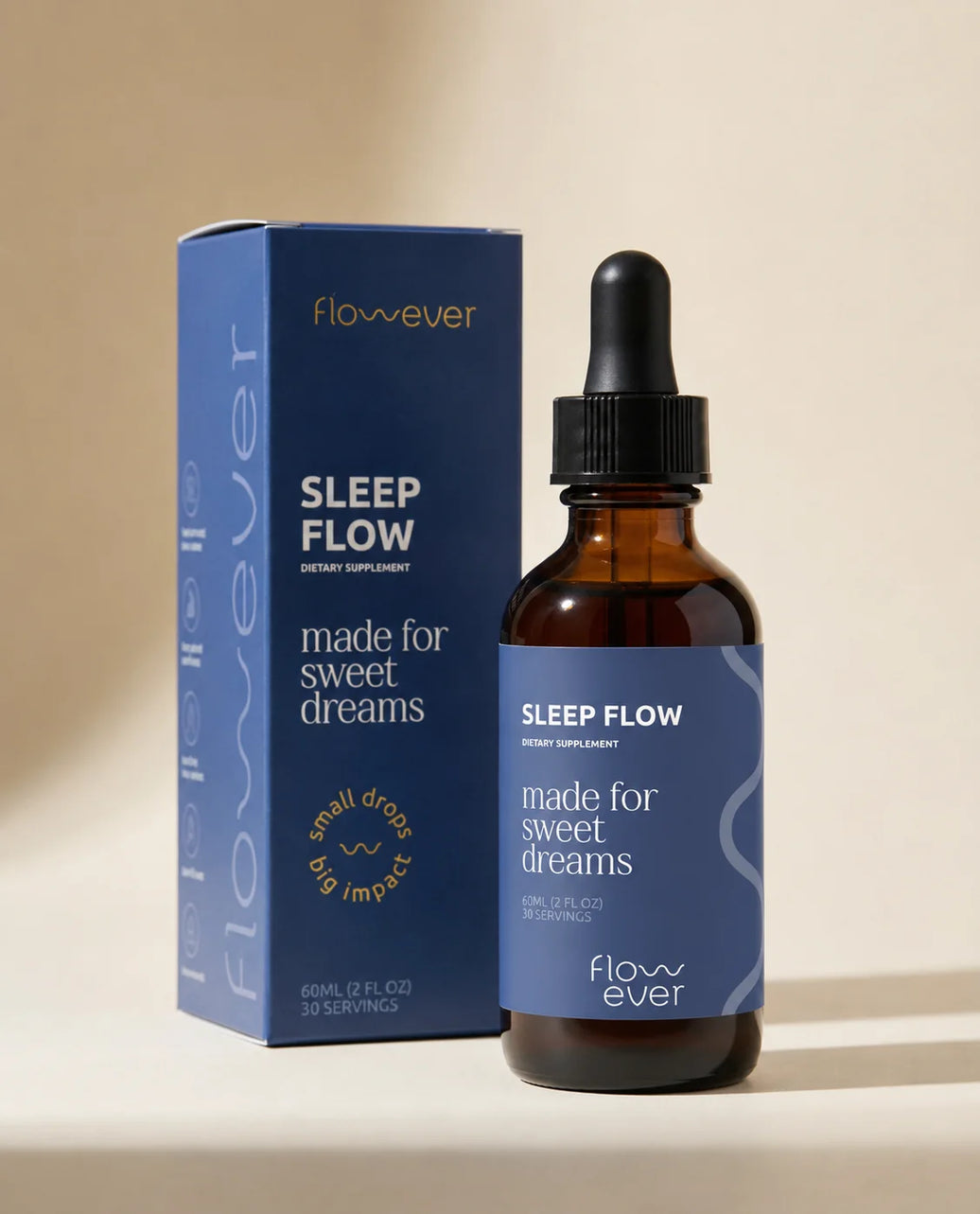
Sleep Flow contains 150 mg of passionflower extract per serving.
It is combined with L-theanine, Montmorency tart cherry, lemon balm, chamomile, and sage.
Within the formula, passionflower provides a botanical traditionally associated with relaxation and supported by preliminary clinical research investigating sleep-related outcomes.
The bottom line
Passionflower is a promising botanical for sleep support, with controlled studies suggesting potential improvements in total sleep time and subjective sleep quality.
At the same time, the number of high-quality clinical studies remains limited, and the results cannot yet establish a universally effective dose or formulation.
Passionflower is therefore best considered as one component of a broader sleep-support strategy rather than a guaranteed solution for insomnia.
Frequently Asked Questions
Does passionflower help with sleep?
Some clinical studies suggest that passionflower may improve certain sleep outcomes, including total sleep time and subjective sleep quality. However, the number of high-quality studies remains limited.
How does passionflower work for sleep?
Researchers have investigated passionflower for its potential effects on GABAergic signaling, a system involved in regulating neuronal activity and relaxation. The exact mechanisms responsible for its effects in humans are still being studied.
Can passionflower help with insomnia?
Passionflower has been studied in people with insomnia and has shown promising results in some trials. However, it has not been established as a treatment for chronic insomnia.
Does passionflower make you sleepy?
Passionflower is traditionally used as a calming botanical. Its potential sleep benefits may be related to relaxation, but clinical evidence does not establish it as a conventional sedative.
How much passionflower should I take for sleep?
There is no universally established optimal dose. Clinical studies have used different extracts, preparations, and doses.
When should I take passionflower?
Research protocols vary, so there is no single evidence-based timing that applies to everyone.
Can passionflower improve deep sleep?
Some studies have measured different aspects of sleep architecture, but current evidence is not sufficient to conclude that passionflower reliably increases deep sleep.
How much passionflower is in Sleep Flow?
Sleep Flow contains 150 mg of passionflower extract per serving, together with L-theanine, Montmorency tart cherry, lemon balm, chamomile, and sage.