
Start with consistency
One of the simplest things you can do for your sleep is keep a relatively consistent sleep and wake schedule.
Your circadian rhythm is an internal biological timing system that helps regulate sleep and wakefulness, hormone rhythms, body temperature, and other physiological processes.
Consistent timing can help reinforce this rhythm.
You don't need to go to bed at exactly the same minute every night, but large differences between weekdays and weekends can make your sleep schedule less predictable.
A consistent wake time can be particularly useful because it helps anchor the beginning of your daily circadian cycle.
Create a wind-down period
A nighttime routine should create a transition between being active and being ready for sleep.
That doesn't necessarily mean stopping everything at a specific hour.
Instead, think about reducing activities that are mentally or emotionally stimulating and replacing them with lower-stimulation activities.
Depending on what works for you, this might include:
-
Reading
-
Gentle stretching
-
Breathing exercises
-
Meditation
-
Journaling
-
Taking a warm shower or bath
-
Listening to calming music
-
Preparing your bedroom for sleep
The most important factor is consistency. When the same calming sequence happens night after night, it can become a useful behavioral cue that bedtime is approaching.
Pay attention to evening light
Light is one of the strongest signals affecting the circadian system.
Bright light exposure in the evening can delay circadian timing and affect melatonin secretion, particularly when the exposure is intense and close to bedtime. Research on evening light shows that its effects depend on factors such as intensity, timing, wavelength, and duration.
You don't necessarily need to eliminate every screen in the evening.
Instead, consider:
-
Dimming the lights in your home as bedtime approaches.
-
Using warmer, less intense lighting.
-
Reducing unnecessary bright-screen exposure late at night.
-
Keeping your bedroom as dark as practical.
If you need to use a screen for work or another important activity, reducing brightness and increasing the distance between your eyes and the screen may be more realistic than trying to avoid screens completely.
The goal is to reduce unnecessary circadian stimulation—not to create anxiety around technology.
Keep your bedroom comfortable
Temperature can influence sleep because the body normally undergoes changes in heat loss and core temperature as part of the transition into sleep.
There isn't one universally ideal bedroom temperature for everyone.
A better approach is to keep the room comfortably cool and adjust bedding, clothing, ventilation, and temperature according to your individual needs.
This can be especially important for people experiencing night sweats or increased temperature sensitivity.
Consider a warm shower or bath
A warm shower or bath may seem counterintuitive when the body needs to cool down for sleep.
But passive body heating before bedtime can actually facilitate heat loss afterward.
A systematic review and meta-analysis found that a warm shower or bath performed approximately 1–2 hours before bedtime was associated with improvements in sleep onset and some measures of sleep quality. The evidence was promising but limited by differences between studies.
You don't need a complicated protocol.
A warm shower as part of your normal wind-down routine may be a simple way to combine relaxation with a potentially sleep-supportive physiological effect.
Think about caffeine timing
Caffeine has a relatively long half-life, meaning that a significant amount can remain in the body several hours after consumption.
The right cutoff varies between individuals because caffeine metabolism differs, and some people are much more sensitive to its effects than others.
If you have difficulty falling asleep or staying asleep, experiment with moving your last caffeine intake earlier in the day.
For some people, that may mean avoiding caffeine after lunch. Others may tolerate an afternoon coffee without noticeable effects.
The important question is not simply:
"Can I fall asleep after drinking coffee?"
It is also:
"Does caffeine change how well I sleep?"
Don't overlook alcohol
Alcohol can make some people feel sleepy initially, but that doesn't necessarily mean it improves sleep quality.
Alcohol can alter sleep architecture and contribute to nighttime awakenings.
If you regularly wake during the night, experimenting with less alcohol—particularly close to bedtime—may be useful.
Use relaxation strategically
A racing mind can make the transition into sleep more difficult.
Relaxation techniques such as slow breathing, meditation, progressive muscle relaxation, or gentle stretching may help reduce mental and physical arousal.
If you have persistent insomnia, these techniques can be useful components of a broader behavioral approach.
For chronic insomnia, however, a structured treatment such as Cognitive Behavioral Therapy for Insomnia (CBT-I) has substantially stronger evidence than sleep hygiene alone. The American Academy of Sleep Medicine recommends multicomponent CBT-I for chronic insomnia in adults.
Where can supplements fit?
Supplements should be considered an optional component of a nighttime routine—not the foundation.
Certain ingredients have been studied for relaxation and sleep support, including L-theanine, tart cherry, lemon balm, passionflower, chamomile, and magnesium.
The strength of evidence varies considerably between ingredients, and research findings for an individual ingredient should not automatically be interpreted as evidence that a particular combination or product will have the same effect.
A thoughtful approach is to build the behavioral and environmental foundation first and then consider whether a supplement fits your individual needs.
A simple nighttime routine
You don't need a complicated 15-step routine.
A practical sequence could look like:
2–3 hours before bed
-
Finish a substantial meal.
-
Avoid or limit alcohol close to bedtime.
-
Start thinking about reducing stimulation.
1–2 hours before bed
-
Dim the lights.
-
Reduce unnecessary screen exposure.
-
Take a warm shower or bath if you enjoy it.
-
Transition into quieter activities.
30–60 minutes before bed
-
Read, journal, stretch, meditate, or practice slow breathing.
-
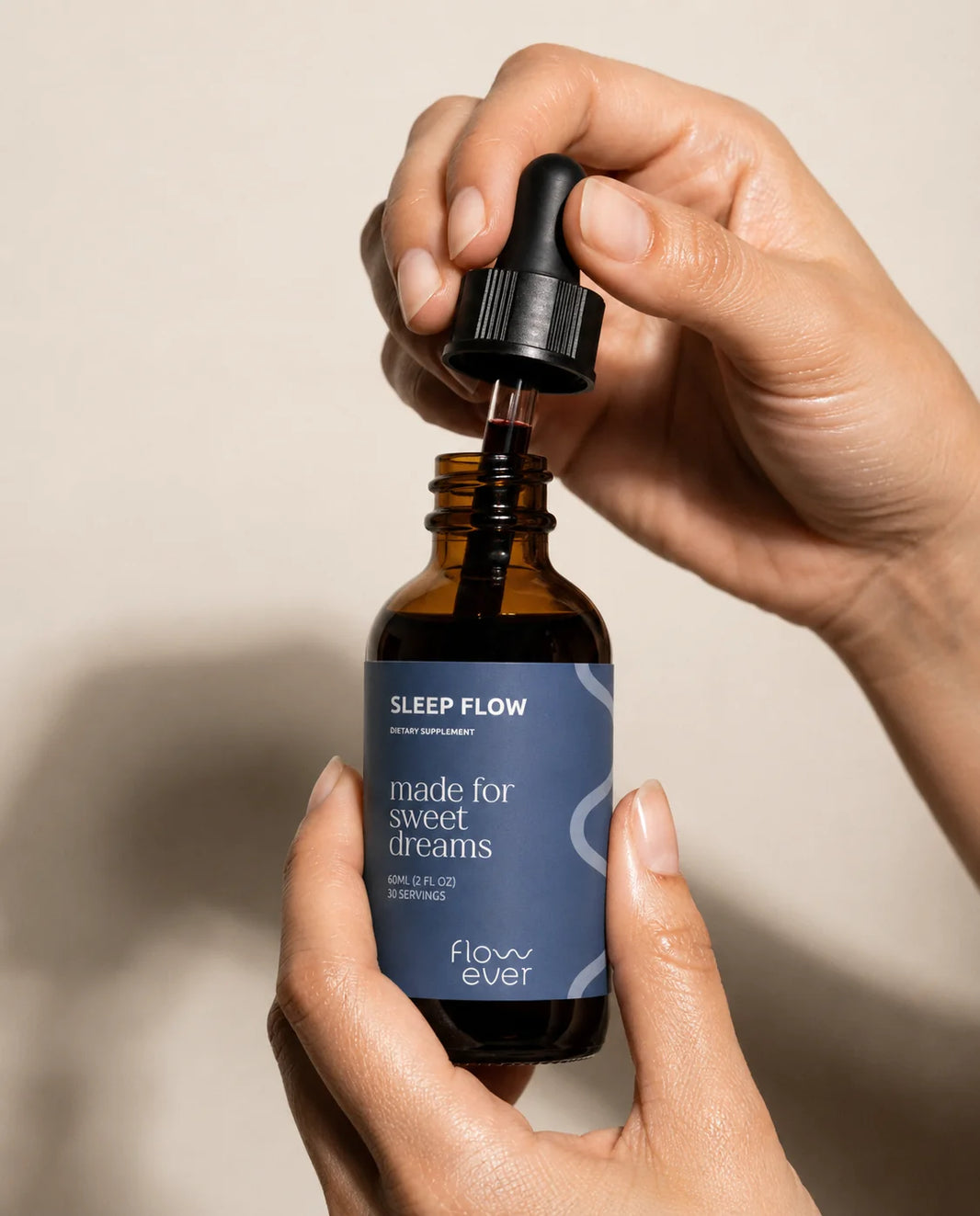
Take any nighttime supplement you have chosen to use according to its directions.
At bedtime
-
Keep the room dark, quiet, and comfortably cool.
-
Go to bed when you are ready to sleep.
In the morning
-
Wake at a consistent time.
-
Get natural light exposure relatively early in the day.
-
Move your body and begin your normal daytime routine.
The exact clock time matters less than creating a pattern that is realistic and repeatable.
What if you wake during the night?
Don't automatically assume that something is wrong.
Brief awakenings are a normal part of sleep, and many people don't remember them.
If you wake and still feel sleepy, try to remain relaxed rather than immediately checking the time or reaching for your phone.
If you become fully awake and frustrated, reducing stimulation and using a calming activity can be more helpful than forcing yourself to sleep.
For persistent insomnia, stimulus control and other CBT-I strategies are evidence-based approaches that can be more effective than simply adding more sleep-hygiene rules.
How Sleep Flow fits into a nighttime routine
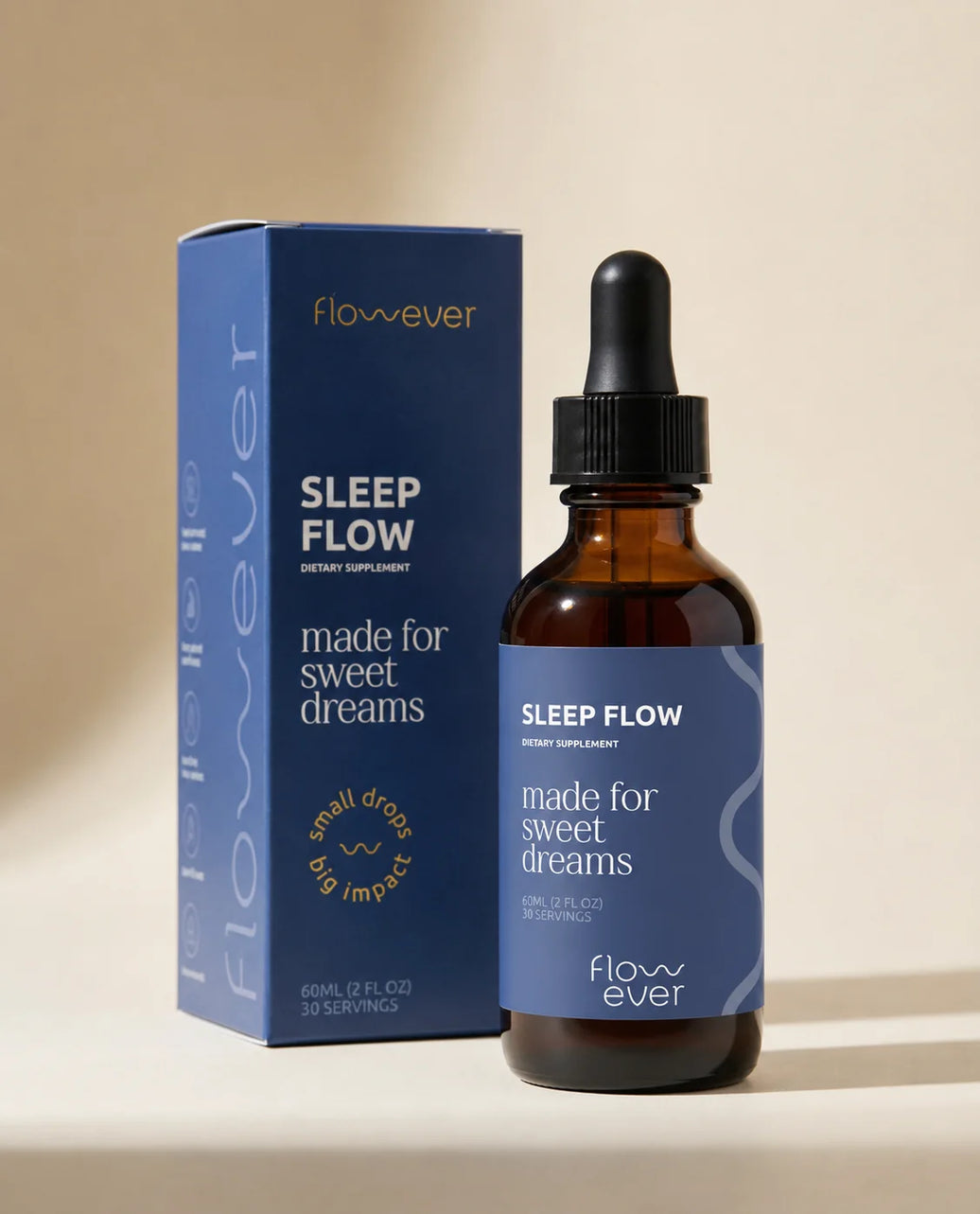
Sleep Flow was designed to complement—not replace—the foundations of healthy sleep.
Each serving contains:
-
430 mg Montmorency tart cherry concentrate
-
150 mg L-theanine
-
200 mg lemon balm extract
-
150 mg passionflower extract
-
100 mg chamomile extract
-
5 mg sage extract
- 5 mg fennel extract
The formula combines ingredients that have been individually studied for relaxation and sleep-related outcomes.
Sleep Flow does not contain supplemental melatonin. Instead, it takes a multi-ingredient approach to nighttime support.
The product is best considered one optional component of a broader sleep routine that also includes consistent timing, appropriate light exposure, a comfortable sleep environment, stress management, and healthy daytime habits.
The bottom line
A better nighttime routine isn't about finding one perfect sleep hack.
It's about creating the conditions that make healthy sleep more likely:
consistent timing + appropriate light + lower stimulation + a comfortable environment + relaxation + healthy daytime habits.
Supplements can be part of that picture, but they don't replace the fundamentals.
And if sleep problems are persistent, severe, or affecting your daytime functioning, the goal should be to understand and address the underlying problem—not simply add more sleep products to the routine.
Frequently Asked Questions
How long should a nighttime routine be?
There is no scientifically established ideal length. A routine can begin 30 minutes before bed or earlier. What matters most is that it creates a consistent transition toward sleep and is realistic enough to repeat.
What should I do 1 hour before bed?
Consider lowering light levels, reducing stimulating activities, putting away unnecessary screens, and choosing calming activities such as reading, stretching, meditation, or journaling.
Should I stop using screens before bed?
Reducing bright and stimulating screen exposure close to bedtime may support circadian timing and sleep. Complete screen avoidance is not necessary for everyone; reducing brightness and unnecessary use may be a more practical approach.
What is the best temperature for sleeping?
There is no single temperature that is ideal for everyone. A comfortably cool bedroom is generally preferable, but individual preferences, bedding, clothing, climate, and night sweats all matter.
Does a warm shower help you sleep?
Research suggests that a warm shower or bath approximately 1–2 hours before bedtime may help reduce the time it takes to fall asleep and may improve some measures of sleep quality.
What time should I stop drinking caffeine?
The ideal cutoff varies according to individual sensitivity and caffeine metabolism. If you have trouble sleeping, experimenting with stopping caffeine earlier in the day—such as after lunch—can be useful.
Should I take a sleep supplement as part of my nighttime routine?
A supplement can be one optional component of a nighttime routine, but it should not replace consistent sleep timing, appropriate light exposure, relaxation, and a comfortable sleep environment.
Can a nighttime routine cure insomnia?
A healthy routine can support better sleep, but sleep hygiene alone is not considered sufficient treatment for chronic insomnia. Persistent insomnia may benefit from evidence-based treatments such as Cognitive Behavioral Therapy for Insomnia (CBT-I).