
Natural Sleep Supplements Without Melatonin: What the Research Says
Melatonin is one of the most widely used supplements for sleep. But it isn't the only option.
A growing number of people are interested in sleep-support ingredients that don't rely on supplemental melatonin—particularly botanicals and nutrients that may support relaxation, sleep quality, or the body's natural transition into sleep.
The evidence varies considerably from one ingredient to another. Some have promising clinical research behind them, while others are supported primarily by traditional use or early-stage studies.
Understanding those differences is important when choosing a sleep supplement.
Why choose a sleep supplement without melatonin?
Melatonin is a hormone involved in regulating the body's circadian rhythm. Supplemental melatonin can be useful in certain situations, particularly when the timing of the sleep-wake cycle is disrupted.
However, melatonin is not necessarily the right approach for everyone.
Some people prefer a formula focused on relaxation rather than directly supplementing a hormone. Others may have already tried melatonin and found that it did not meet their needs.
A non-melatonin formula can therefore take a different approach: supporting relaxation, healthy sleep habits, and other physiological processes associated with sleep.
This does not mean that non-melatonin supplements are inherently better than melatonin. They simply represent a different strategy.
What are the best natural sleep supplements without melatonin?
There is no single ingredient that can be considered the best for everyone.
The evidence varies depending on the ingredient, preparation, dose, population, and type of sleep difficulty being studied.
Some of the ingredients with clinical research relevant to sleep and relaxation include:
L-theanine
L-theanine is an amino acid naturally found in tea. Human research suggests that it may support relaxation and improve some subjective measures of sleep quality and sleep onset.
A 2025 systematic review and meta-analysis found improvements in subjective sleep-onset latency, daytime dysfunction, and overall subjective sleep quality, while also noting that more research is needed to establish optimal dose and duration. (pubmed.ncbi.nlm.nih.gov)
Montmorency tart cherry
Montmorency tart cherry has attracted attention in sleep research because it naturally contains melatonin and other bioactive compounds, including anthocyanins.
Some clinical studies have reported improvements in sleep-related measures and increases in melatonin-related markers, but results have not been consistent across all trials.
A 2025 systematic review concluded that tart cherry may improve some sleep outcomes, while emphasizing that the available evidence remains limited and heterogeneous. (pubmed.ncbi.nlm.nih.gov)
Importantly, naturally occurring melatonin in a food or botanical is not the same as saying that a tart cherry product provides a standardized pharmacological dose of melatonin.
Lemon balm
Lemon balm (Melissa officinalis) has traditionally been used for relaxation and is increasingly being investigated for sleep and emotional well-being.
Clinical studies suggest potential benefits for subjective sleep quality, particularly in people experiencing stress or emotional distress, although results depend on the specific extract and formulation studied.
Recent clinical research has shown promising results with standardized lemon balm preparations, but more controlled studies are needed. (pubmed.ncbi.nlm.nih.gov)
Passionflower
Passionflower (Passiflora incarnata) has also been investigated for sleep.
In one randomized, placebo-controlled study involving adults with insomnia disorder, passionflower extract increased total sleep time compared with placebo after two weeks. Other sleep measures did not consistently differ between groups. (pubmed.ncbi.nlm.nih.gov)
This makes passionflower an interesting ingredient, but not a proven treatment for insomnia.
Chamomile
Chamomile is one of the most widely used botanicals for relaxation and bedtime.
A 2024 systematic review and meta-analysis found improvements in subjective sleep quality, measured using the Pittsburgh Sleep Quality Index. However, the analysis did not find consistent improvements in sleep duration, sleep efficiency, or daytime functioning, and the studies were highly heterogeneous. (pubmed.ncbi.nlm.nih.gov)
This suggests that chamomile may be useful as part of a relaxation-focused nighttime routine, while also highlighting the limitations of the current evidence.
Does "natural" mean safer?
Not necessarily.
Natural ingredients can have biological effects, interact with medications, and may not be appropriate for everyone.
Safety depends on the specific ingredient, dose, formulation, individual health status, medications, pregnancy or breastfeeding status, and other factors.
This is why "natural" should not automatically be interpreted as "risk-free."
Quality also matters. Botanical supplements can vary considerably in extraction method, concentration, standardization, and manufacturing quality.
Single ingredient vs. multi-ingredient formulas
Another important consideration is whether a supplement contains one ingredient or several.
Single-ingredient products can make it easier to understand what you are taking and to evaluate the evidence for that specific ingredient.
Multi-ingredient formulas take a different approach by combining ingredients that may have complementary roles.
However, it is important not to assume that combining ingredients automatically makes them more effective. If a clinical trial has not tested the specific combination, claims about synergy remain hypothetical.
The most useful question is therefore not simply:
"How many ingredients are in the formula?"
but:
"Why is each ingredient there, and what evidence supports its inclusion?"
What should you look for in a non-melatonin sleep supplement?
When evaluating a sleep supplement, consider:
1. Evidence
Look for ingredients that have at least some human clinical research rather than relying exclusively on laboratory or animal studies.
2. Transparent dosing
The label should clearly state how much of each active ingredient is provided per serving.
3. Specific formulations
For botanicals, the type of extract can matter. "Lemon balm" or "chamomile" alone doesn't tell you everything about the preparation.
4. Reasonable claims
Be cautious of products promising to "cure insomnia," guarantee sleep, or produce pharmaceutical-like effects.
5. Quality and manufacturing
Look for reputable manufacturing practices and appropriate quality controls.
6. A broader sleep strategy
Supplements should complement—not replace—fundamental sleep habits and appropriate medical evaluation when sleep problems are persistent.
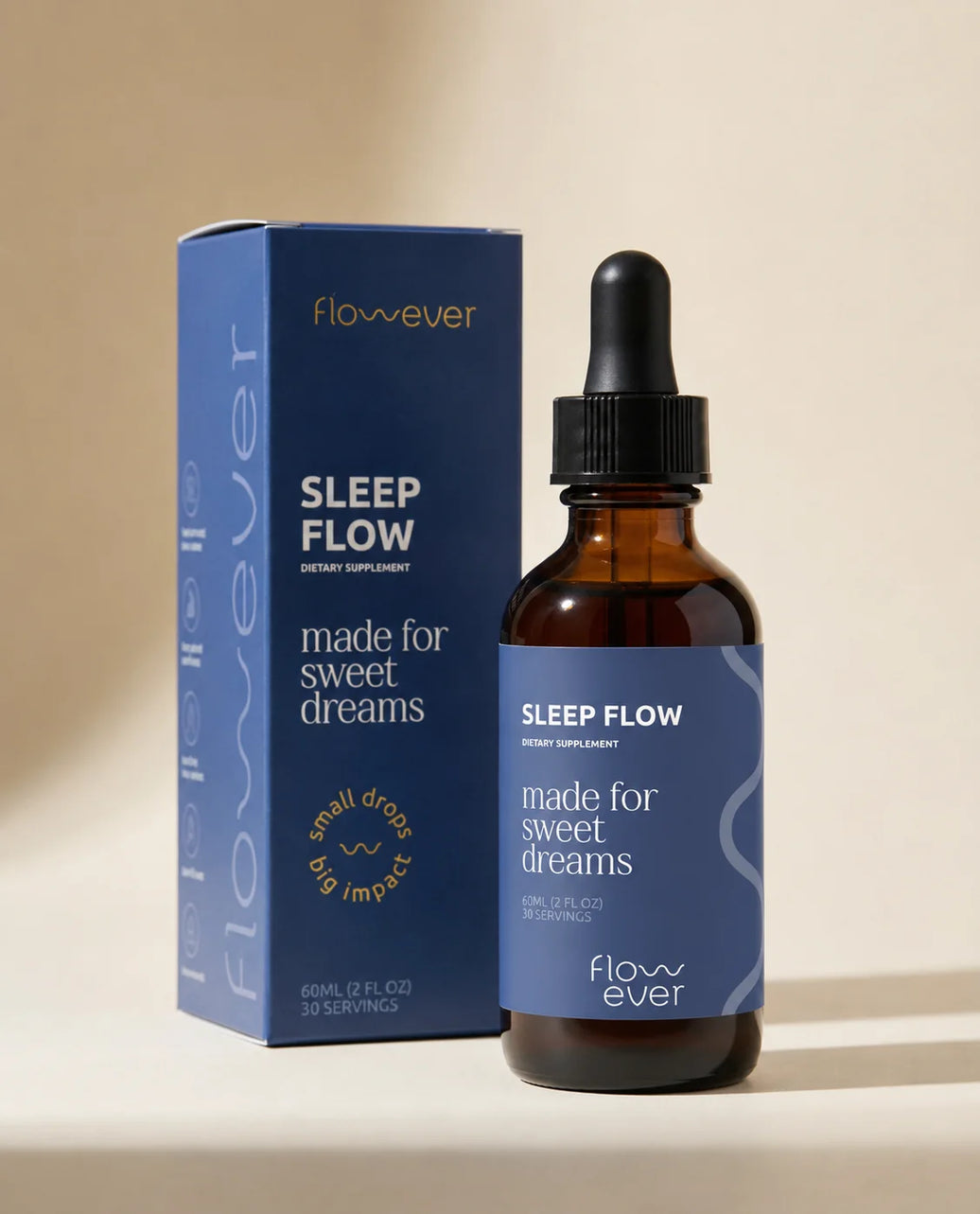
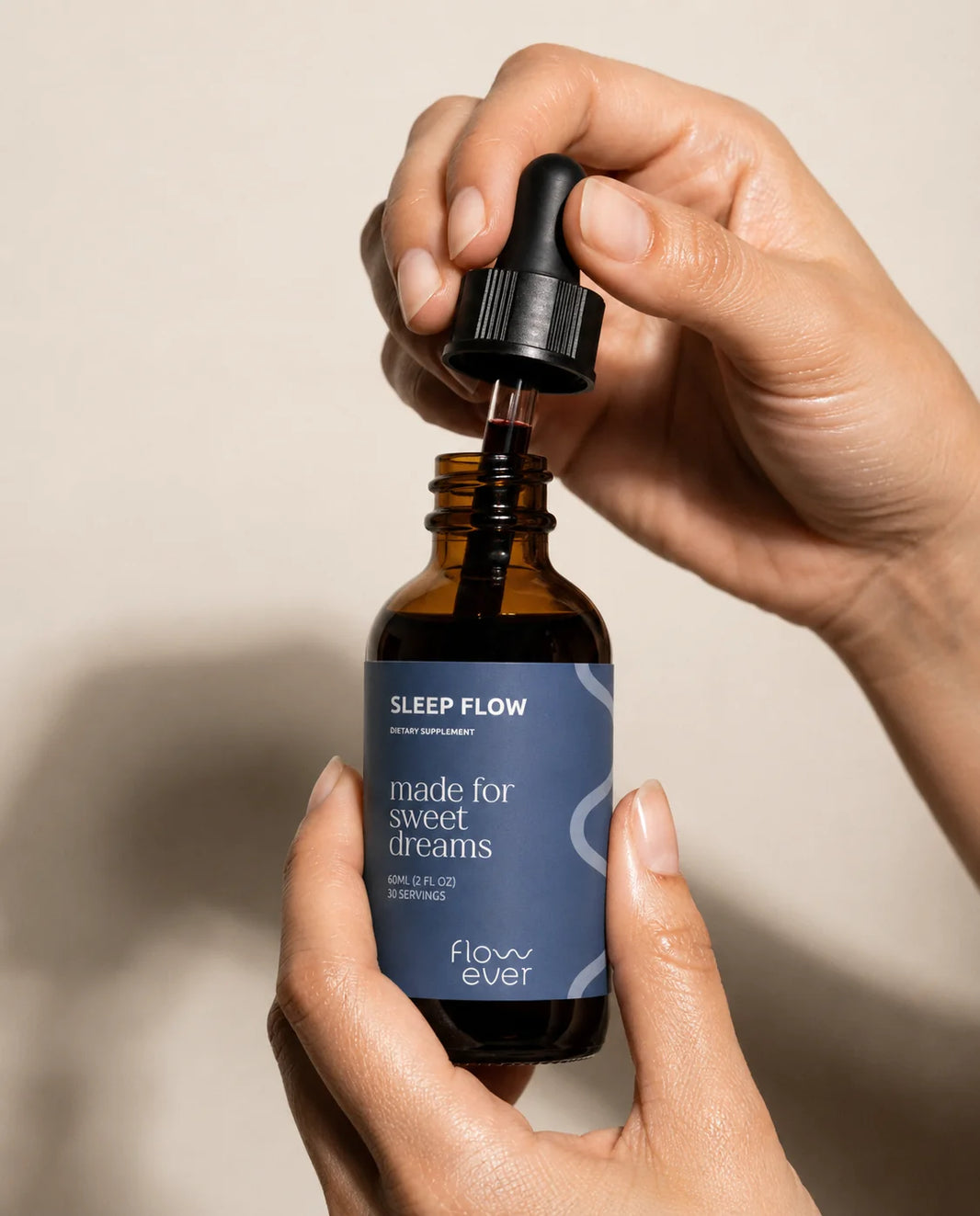
How Sleep Flow approaches sleep support
Sleep Flow takes a multi-ingredient, non-melatonin approach.
Each serving provides:
-
430 mg Montmorency tart cherry concentrate
-
150 mg L-theanine
-
200 mg lemon balm extract
-
150 mg passionflower extract
-
100 mg chamomile extract
-
5 mg sage extract
- 5 mg fennel extract
The formula was designed around ingredients with different research backgrounds and traditional uses related to nighttime relaxation and sleep support.
Rather than relying on supplemental melatonin itself, Sleep Flow combines naturally occurring compounds and botanical ingredients in a single nighttime formula.
Importantly, the inclusion of an ingredient does not mean that the complete Sleep Flow formula has been clinically proven to treat insomnia. The evidence described throughout this article relates primarily to the individual ingredients or specific preparations studied in clinical research.
The bottom line
There are several non-melatonin ingredients with promising research for sleep and relaxation, including L-theanine, Montmorency tart cherry, lemon balm, passionflower, and chamomile.
However, the evidence is not equally strong for all ingredients, and no supplement should be presented as a guaranteed solution for insomnia.
For people interested in a non-melatonin approach, the most useful strategy is to look for transparent formulas, clearly disclosed doses, evidence-based ingredients, and realistic claims.
Sleep support is rarely about one ingredient alone. It is about creating the right conditions for healthy sleep—and choosing supplements thoughtfully when they are appropriate.
Frequently Asked Questions
What are the best natural sleep supplements without melatonin?
There is no single supplement that is best for everyone. Ingredients such as L-theanine, tart cherry, lemon balm, passionflower, and chamomile have varying levels of research related to sleep and relaxation.
Can you improve sleep without taking melatonin?
Yes. Sleep can be supported through consistent sleep timing, appropriate light exposure, exercise, stress management, a comfortable sleep environment, and, when appropriate, non-melatonin supplements.
Is tart cherry a good alternative to melatonin?
Tart cherry is a different approach rather than a direct replacement for melatonin. It naturally contains melatonin and other bioactive compounds, but it does not provide the same standardized dose as a melatonin supplement.
Does L-theanine work without melatonin?
L-theanine has been studied both alone and in combination formulas. Research suggests potential benefits for relaxation and some subjective sleep measures, although the evidence is still developing.
What herbs help with sleep without melatonin?
Botanicals studied for sleep and relaxation include lemon balm, passionflower, and chamomile. The quality and strength of evidence varies between these ingredients and between different preparations.
Are natural sleep supplements safe?
Natural does not automatically mean safe for everyone. Supplements can have biological effects and may interact with medications or be inappropriate in certain health conditions.
Is it better to take one sleep ingredient or several?
There is no universal answer. Single-ingredient products make it easier to evaluate the evidence for one ingredient, while multi-ingredient formulas may combine ingredients with complementary roles. A combination should not automatically be assumed to be more effective.
Does Sleep Flow contain melatonin?
No. Sleep Flow does not contain supplemental melatonin. It provides Montmorency tart cherry, L-theanine, lemon balm, passionflower, chamomile, and sage.