


Why does waking at 3 AM happen?
Several factors can contribute to middle-of-the-night awakenings.
Your circadian rhythm
Your body follows a 24-hour circadian rhythm that regulates sleep, body temperature, hormone production, and alertness.
As morning approaches, the body's physiology gradually shifts toward wakefulness. Cortisol normally begins rising during the latter part of the night and reaches its highest levels around the morning.
This is a normal biological process—not necessarily a "cortisol surge" or a sign that something is wrong.
If your sleep is already fragmented by stress, environmental factors, hormonal changes, or another sleep problem, you may simply become more aware of an awakening during this lighter part of the night.
If you wake up with racing thoughts
If you wake up and your mind immediately becomes active—replaying conversations, planning tomorrow, worrying, or solving problems—psychological stress may be contributing to the difficulty returning to sleep.
Stress and anxiety are well-established contributors to insomnia and sleep disruption.
In this situation, the problem may not be that your body suddenly "released too much cortisol." Instead, increased mental and physiological arousal can make it harder to transition back into sleep.
This is one reason relaxation strategies before bed—and during a nighttime awakening—can be useful.
Ingredients such as L-theanine and lemon balm are being studied for their potential effects on relaxation and sleep, although the evidence is still developing and neither should be considered a treatment for insomnia.
What about blood sugar?
Blood glucose regulation and sleep are biologically connected, but waking at 3 AM should not automatically be interpreted as evidence that your blood sugar has dropped.
For most healthy people, the body has multiple mechanisms for maintaining blood glucose during an overnight fast.
That said, meal composition, alcohol intake, metabolic health, medications, and individual glucose regulation can all influence nighttime physiology.
Rather than assuming that every 3 AM awakening is caused by low blood sugar, it is more useful to look at the broader pattern.
A balanced evening meal containing adequate protein, fiber-rich carbohydrates, and healthy fats may be part of an overall approach to stable energy and metabolic health.
What about magnesium?
Magnesium is frequently discussed as a sleep supplement because it plays important roles in nervous-system function, muscle function, and many metabolic processes.
However, the evidence for magnesium supplementation and sleep is not definitive.
A 2026 systematic review of randomized controlled trials found inconsistent results across studies and rated the certainty of evidence as low to very low. A recent randomized trial of magnesium bisglycinate found a modest improvement in insomnia severity in adults with poor sleep, particularly suggesting a possible benefit in people with lower dietary magnesium intake. (pubmed.ncbi.nlm.nih.gov) (pubmed.ncbi.nlm.nih.gov)
So magnesium may be relevant for some people, but waking at 3 AM is not, by itself, evidence of magnesium deficiency.
Why can sleep change during perimenopause?
For many women, nighttime awakenings become more frequent during the menopausal transition.
Hormonal fluctuations during perimenopause can affect sleep directly and indirectly. Vasomotor symptoms such as night sweats and hot flashes can interrupt sleep, while changes in reproductive hormone levels may also be associated with greater sleep fragmentation.
Research in perimenopausal women has found associations between reproductive hormone profiles and nighttime awakenings, although the relationship is complex and cannot be reduced to a single hormone or a specific time of night. (pubmed.ncbi.nlm.nih.gov)
If your sleep changed significantly around the same time as other perimenopausal symptoms, hormones may therefore be one piece of the puzzle.
Your sleep environment matters too
Sometimes the explanation is much simpler.
Light, temperature, noise, alcohol, pets, a partner moving in bed, an uncomfortable mattress, or the need to use the bathroom can all interrupt sleep.
Even if the original trigger is brief, becoming frustrated or anxious about being awake can make it harder to fall asleep again.
A consistent bedtime, a dark and cool bedroom, limiting alcohol close to bedtime, and reducing stimulating activities before bed can all support better sleep continuity.
What should you do if you wake up at 3 AM?
First, try not to turn the clock into the problem.
If you wake briefly and feel sleepy, allow yourself to remain relaxed rather than immediately checking the time or reaching for your phone.
If you are fully awake, focus on lowering stimulation: keep the lights dim, avoid scrolling, and use a calming breathing or relaxation technique.
During the day, focus on the foundations of healthy sleep:
-
Keep a consistent sleep and wake schedule.
-
Get natural light in the morning.
-
Exercise regularly.
-
Manage stress throughout the day rather than only at bedtime.
-
Limit alcohol close to bedtime.
-
Create a consistent wind-down routine.
-
Keep your bedroom dark, quiet, and comfortable.
If nighttime awakenings are frequent, prolonged, or associated with significant daytime fatigue, snoring, gasping, pain, night sweats, or other symptoms, it is worth discussing them with a healthcare professional. Persistent insomnia can have many causes, including sleep disorders, medications, medical conditions, and mental-health conditions.
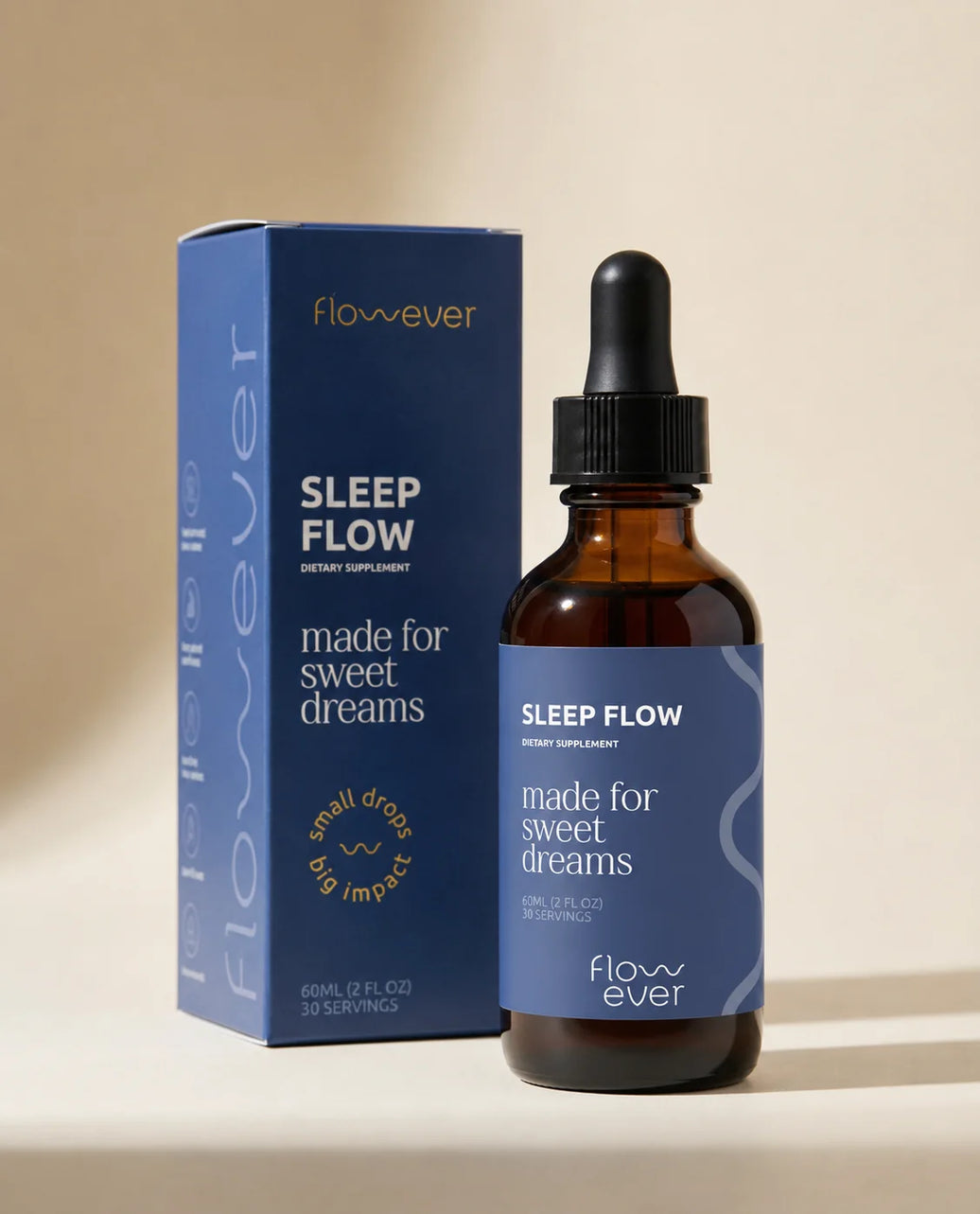
How Sleep Flow approaches nighttime sleep support
Sleep Flow was designed as a multi-ingredient nighttime formula rather than as a treatment for insomnia.
Each serving contains:
-
430 mg Montmorency tart cherry concentrate
-
150 mg L-theanine
-
200 mg lemon balm extract
-
150 mg passionflower extract
-
100 mg chamomile extract
-
5 mg sage extract
- 5 mg fennel extract
The ingredients were selected based on their individual research backgrounds and traditional uses related to relaxation and sleep support.
Sleep Flow does not contain supplemental melatonin. Instead, it combines botanical ingredients and L-theanine in a nighttime formula designed to support relaxation and healthy sleep.
Importantly, the evidence for the individual ingredients should not be interpreted as evidence that the complete Sleep Flow formula has been clinically proven to prevent 3 AM awakenings or treat insomnia.
The bottom line
Waking at 3 AM does not have one universal explanation—and the clock itself usually isn't the diagnosis.
Sleep architecture, circadian rhythms, stress and mental arousal, hormonal changes, environmental factors, alcohol, medical conditions, and other variables can all contribute to nighttime awakenings.
Rather than assuming that every 3 AM awakening is caused by cortisol, blood sugar, or a nutrient deficiency, look at the pattern and the context.
When occasional, nighttime waking is usually nothing to worry about. When it becomes frequent or affects how you function during the day, understanding the underlying cause is more important than simply trying to suppress the awakening with a supplement.
Frequently Asked Questions
Why do I keep waking up at 3 AM?
There is no single reason. Sleep becomes lighter as the night progresses, and stress, environmental factors, alcohol, hormonal changes, medical conditions, and other factors can contribute to nighttime awakenings.
Does waking up at 3 AM mean my cortisol is too high?
Not necessarily. Cortisol naturally begins increasing during the latter part of the night as part of the body's preparation for waking. A 3 AM awakening by itself does not demonstrate abnormal cortisol levels.
Does waking at 3 AM mean my blood sugar is low?
Not necessarily. Healthy people have multiple mechanisms for maintaining blood glucose during an overnight fast. Meal composition, alcohol, medications, and metabolic health can influence nighttime physiology, but a 3 AM awakening alone is not evidence of hypoglycemia.
Can stress cause me to wake up during the night?
Yes. Psychological stress and increased mental or physiological arousal can contribute to sleep disruption and make it harder to return to sleep after waking.
Why do I wake up with racing thoughts?
Mental arousal can become more noticeable during a nighttime awakening. Worrying, planning, or replaying events can make it harder to transition back into sleep.
Can perimenopause cause 3 AM awakenings?
Perimenopause can contribute to more fragmented sleep, particularly through night sweats, temperature changes, hormonal fluctuations, and other symptoms. However, waking at 3 AM is not a specific sign of perimenopause.
Can magnesium stop 3 AM awakenings?
There is not enough evidence to say that magnesium specifically prevents 3 AM awakenings. Research on magnesium and sleep is still mixed.
When should nighttime awakenings be evaluated?
If awakenings are frequent, prolonged, or causing significant daytime fatigue, it is worth discussing them with a healthcare professional. Persistent sleep disruption can have many possible causes.